
The next chapter after tent camping
Keep the wild. Lose the hard parts.
You already know how good morning air feels outside a tent. Basecamp does not replace that feeling—it protects it from the things that make you stay home.
01
The best parts of camping are still outside.
Tent campers already understand the point of the trip. It is coffee before the trailhead fills, dinner under a changing sky, and the quiet that arrives after the last lantern clicks off. The goal is not to trade those moments for a living room on wheels. The goal is to make the moments easier to reach.
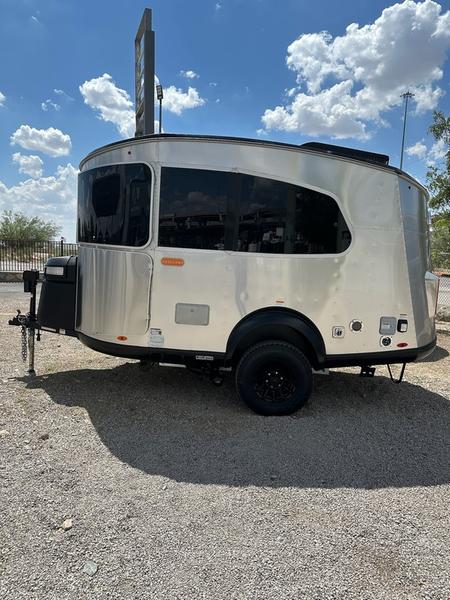
Basecamp keeps the footprint compact and the focus outdoors. You still step outside to live the day. The difference is what waits when the wind rises, the temperature drops, or rain starts tapping after dark: a solid shell, a dry bed, a kitchen, a bathroom, and a place for every layer of gear.
02
Less setup changes the whole weekend.
A tent trip can begin to feel like a negotiation with the forecast. Packing, loading, pitching, inflating, drying, and repacking all take time from a short weekend. Basecamp turns arrival into a smaller ritual. Level the trailer, connect what the site provides, open the rear hatch, and start living outside.
That matters most on the trips you almost skip—the Friday departure after work, the shoulder-season weekend, or the one-night stop on the way to somewhere bigger. When camp is easier to establish and easier to leave, the map opens up.
- A secure place to keep gear packed between trips
- Shelter that is ready when the weather changes
- A kitchen and wet bath without building a camp from separate pieces
Basecamp does not ask you to become a different kind of camper. It simply makes it easier to go more often.
03
Choose the Basecamp that matches your rhythm.
The Basecamp 16X is the minimalist move: 16 feet 2 inches long, a 2,700-pound base weight, and sleeping space for up to two. It rewards travelers who pack intentionally and want the smallest, simplest Basecamp footprint.
The Basecamp 20X adds a second convertible living area and sleeps up to four. At 20 feet 2 inches with a 3,500-pound base weight, it creates more room for a partner, a small family, a workstation, or the gear that comes with bigger plans.
Those published weights are starting points, not tow approvals. Your tow vehicle’s rating, payload, hitch setup, passengers, and loaded cargo all matter. A walkthrough with the trailer and tow vehicle details in hand is the right way to make the decision.
04
Your first trip should feel familiar.
Do not make the first Basecamp weekend a test of distance. Choose a campground close enough to enjoy the drive, arrive with daylight, and cook the meal you already know how to make. Practice the systems while the stakes are low. Notice where your gear naturally wants to live.
By Sunday, the biggest difference may not be the bed or the hot water. It may be the realization that packing for the next trip already feels easier. That is the real power of Basecamp: fewer reasons to postpone the life you already love.