Travel trailer comparison
Trade Wind vs. Flying Cloud: Solar Capability or Family Flexibility?
Trade Wind is built to stay capable when hookups disappear. Flying Cloud is built to make more kinds of travelers feel at home. The right choice starts with the trips you actually take.
01
Start with the mission, not the upholstery.
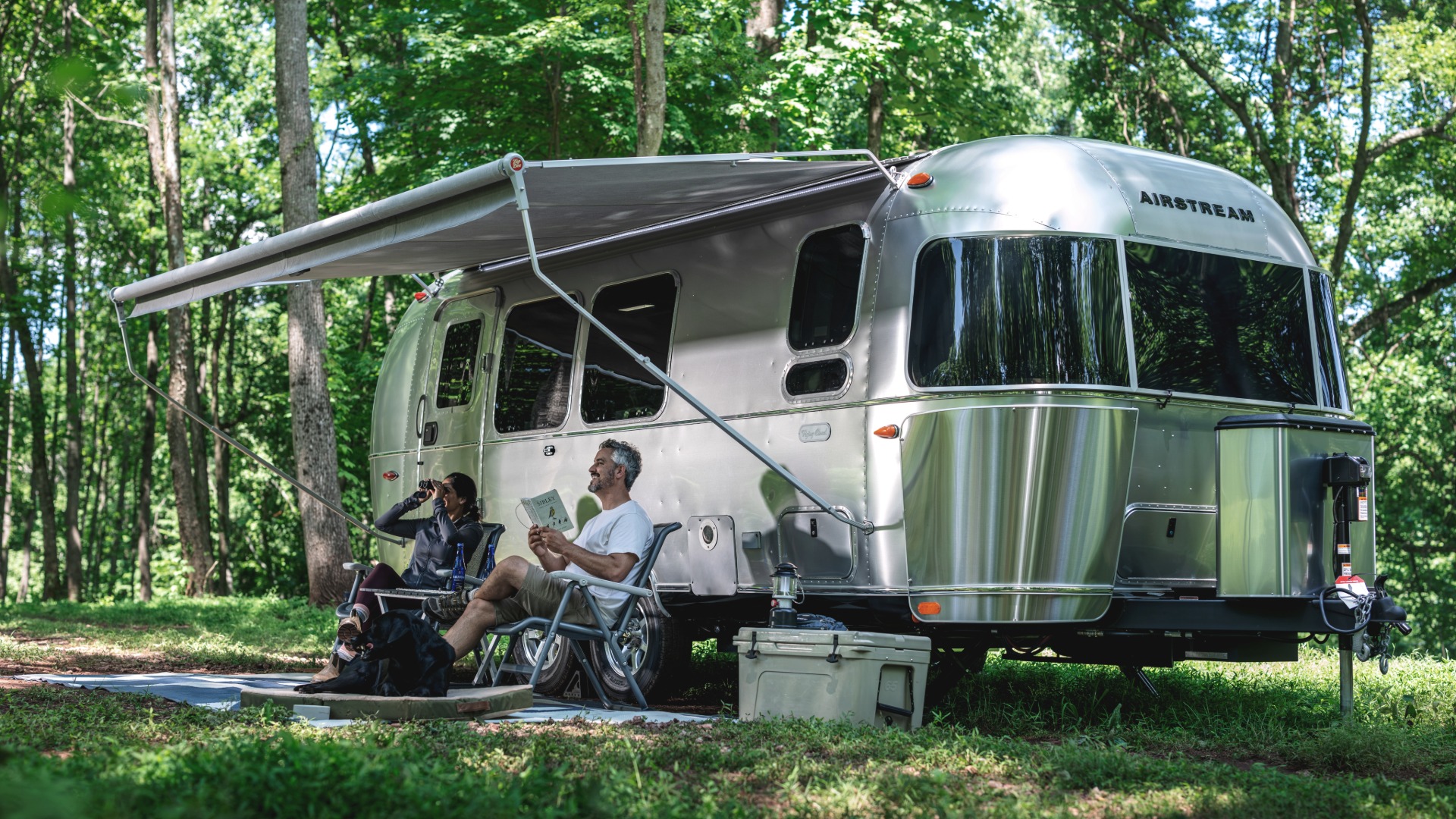
Trade Wind and Flying Cloud share the things that make an Airstream recognizable: a riveted aluminum shell, dual-axle stability, panoramic windows, handcrafted cabinetry, heated tanks, and a travel-first interior. The difference is what each model is designed to solve. Trade Wind concentrates more of the budget and engineering on stored energy, solar charging, inverter capacity, and clearance for travelers who deliberately camp away from hookups.
Flying Cloud concentrates on range. Airstream's current lineup spans 23 to 30 feet, five floor plans, and sleeping capacity up to eight, depending on configuration. It is the family-friendly choice because it gives buyers more ways to balance beds, lounge space, storage, and the number of people who need a place at the end of the day.
02
Choose Trade Wind when power changes where you can camp.
The current Trade Wind family includes 23FB, 25FB, and 27FB floor plans. Airstream's published specifications list 500 watts of rooftop solar on the 23FB and 600 watts on the 25FB and 27FB. The 23FB and 25FB pair a 10.3-kWh heated lithium battery system with a 3,000-watt inverter. The 27FB steps up to 18.5 kWh of heated and cooled lithium storage and a 5,000-watt inverter.
Those numbers create meaningful flexibility for lights, refrigeration, outlets, fans, and other onboard systems when shore power is not available. They do not create unlimited electricity. Shade, season, temperature, appliance demand, and how long you stay all affect the result. Air conditioning is especially energy intensive. The useful question is not whether a trailer is 'off-grid.' It is how many watt-hours your ordinary day consumes and how reliably the system can replace them.
Trade Wind also adds a three-inch lift, all-terrain tires, a recirculating tankless water heater, and adventure-focused protection. That equipment supports dispersed camping and rougher approaches, but it does not turn the trailer into an off-road vehicle. Clearance, road conditions, weather, and the tow vehicle still set the safe limit.
- Best fit: travelers who regularly camp without shore power
- Power advantage: 10.3 to 18.5 kWh of published lithium capacity, depending on floor plan
- Planning rule: build an energy budget around the appliances you will actually use
Trade Wind buys you energy independence. Flying Cloud buys you more ways to arrange the people and the trip.
03
Choose Flying Cloud when the people shape the floor plan.
Flying Cloud is Airstream's most versatile family of travel trailers. The current range begins at 23 feet and reaches 30 feet, with layouts that include front-bed plans and a 30FB Bunk. On the largest bunk configuration, Airstream lists sleeping space for up to eight, a 53-gallon fresh-water tank, and substantial carrying capacity for the food, clothing, and equipment that follow a bigger group.
The standard Flying Cloud power system is more campground-oriented than Trade Wind's. Current published specifications list a 2.5-kWh heated lithium battery system, 300 watts of solar, and a 2,000-watt inverter on the 30FB Bunk specification page. That is useful capacity for travel days, overnight stops, and measured dry camping, while families planning longer stays without hookups should be more deliberate about energy use and charging opportunities.
The payoff is flexibility inside. A bunk room can preserve sleeping space without rebuilding the dinette every night. Other floor plans favor a quieter couple's layout, twin beds, or more open lounge space. If the trip falls apart when one person has nowhere to sleep, work, or decompress, floor-plan fit matters more than the largest battery number.
04
Compare similar lengths before comparing entire model lines.
An apples-to-apples walk-through begins with the 23FB, 25FB, or 27FB sizes both families can offer. At 23 feet 11 inches, the Trade Wind 23FB and Flying Cloud 23FB protect a compact footprint. Move to 25 or 27 feet and both models create more room for storage, cooking, lounging, and separate bed choices, while hitch weight, base weight, and tow-vehicle demands rise.
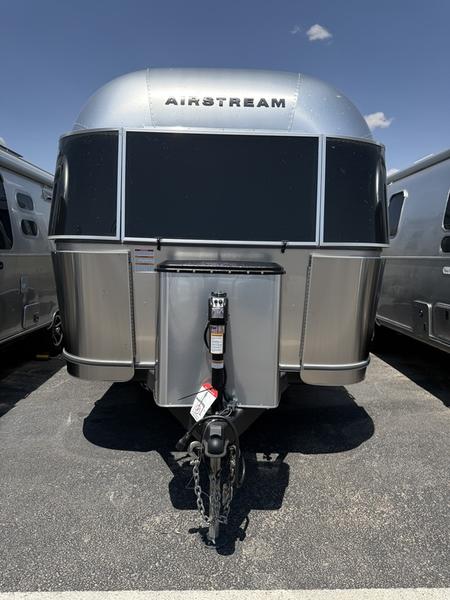
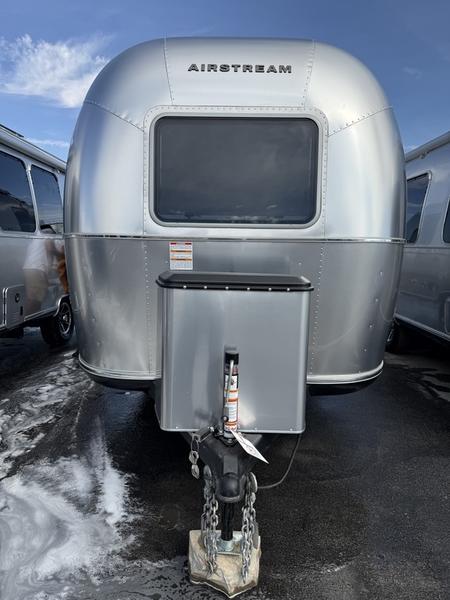
The live inventory at Airstream El Paso makes the difference tangible. The available 2026 Trade Wind 23FB is a compact power-focused example with a published 500-watt solar system, 10.3-kWh battery, 3,000-watt inverter, 37-gallon fresh-water tank, and sleeping space for up to four. The available 2026 Midnight Flamingo Flying Cloud 27FB stretches to 28 feet 2 inches, sleeps a larger travel party, and gives buyers a roomier example of the Flying Cloud approach.
Use published weights only as the beginning of the towing conversation. Passengers, cargo, hitch equipment, water, factory options, and the trailer's actual certification labels determine the real combination. Confirm the exact VIN and equipment before choosing a tow vehicle or assuming available payload.
05
West Texas exposes the tradeoff quickly.
Around El Paso, the same trailer may face intense sun, long distances between services, strong crosswinds, cold high-desert nights, and summer air-conditioning demand. Trade Wind's larger energy reserve is valuable when the itinerary favors dispersed sites or parks without reliable hookups. Flying Cloud's broader layout range is valuable when children, grandparents, friends, or work-from-road needs determine whether the cabin stays comfortable for more than a weekend.
Water deserves equal attention. A larger battery cannot refill a fresh tank, and a family can move through water faster than expected. Plan the power and water budget together, identify legal dump and refill points, and keep enough reserve for weather or route changes. Solar is strongest when it supports a complete camp plan rather than standing in for one.
06
Let one ordinary trip make the decision.
Picture the next three-night trip instead of an abstract lifetime of travel. Where will the trailer park? Is shore power dependable? How many beds must remain usable? Which appliances will run after sunset? How much water and gear will leave home? If losing hookups changes the destination, Trade Wind's deeper power system likely earns its place.
If the trip succeeds or fails on bunk space, seating, storage, and the ability to give everyone a comfortable routine, Flying Cloud is probably the stronger fit. Neither is the lesser Airstream. They are two good answers to different constraints. Walk through the exact trailers, bring the tow-vehicle payload information, and choose the one that removes the most friction from the trips you will take most often.