Touring coach comparison
Interstate 19 vs. Rangeline: Choosing a Touring Coach
Both put Airstream craftsmanship into a nimble Class B. One leads with compact Mercedes-Benz refinement; the other creates more room for family, gear, and a flexible camp routine.
01
Begin with two different foundations.
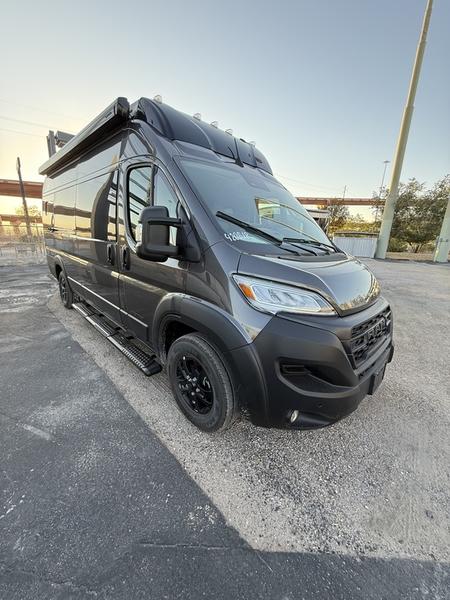
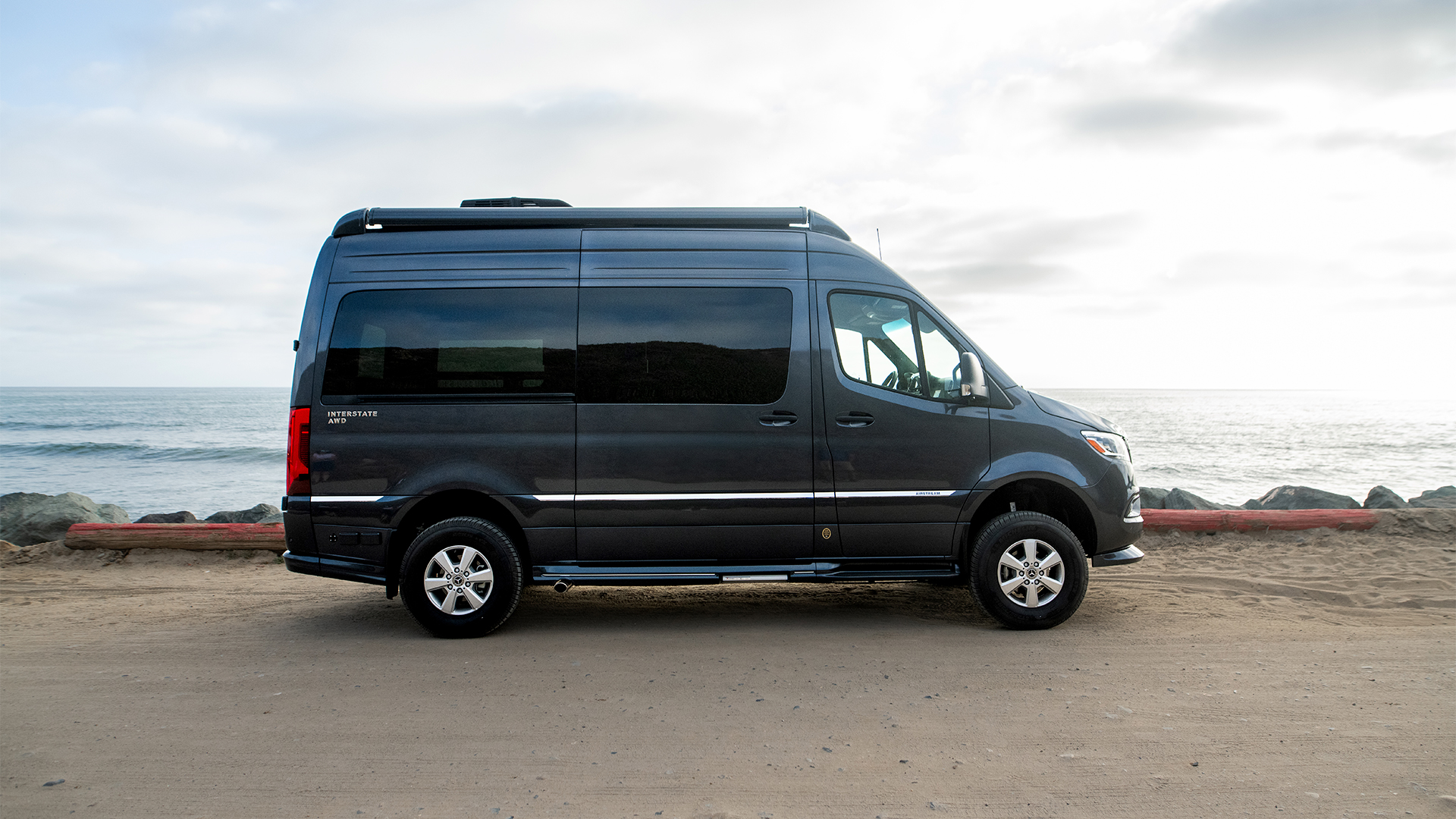
The Interstate 19GT and Rangeline both deliver a kitchen, wet bath, climate control, sleeping space, and Airstream craftsmanship in a Class B footprint. The meaningful difference starts underneath. The Interstate 19GT uses a Mercedes-Benz Sprinter 2500 chassis with all-wheel drive, a high-output 2.0-liter turbo-diesel engine, and a 144-inch wheelbase. The Rangeline 21PS uses a Ram ProMaster 3500 chassis with front-wheel drive, a 3.6-liter gasoline V6, and a 159-inch wheelbase.
Airstream lists the Interstate 19GT at 19 feet 5 inches long. The Rangeline 21PS measures 20 feet 11 inches. That 18-inch difference is easy to dismiss on paper, yet it shapes turning, parking, interior circulation, and the amount of gear that can remain organized during a trip. Neither answer is universally better. One rewards the traveler who protects every inch of exterior footprint; the other spends more length on flexibility inside.
02
Choose Interstate 19GT for compact refinement and AWD confidence.
The Interstate 19GT is the shorter coach and the more luxury-focused of this pair. Its rear power sofa converts into a 66-by-72-inch sleeping area, and Airstream rates it to seat up to four and sleep up to two. The cabin is designed to move from road lounge to evening retreat without asking the van to become larger than it is.
Its Mercedes-Benz drivetrain is a central part of the decision. All-wheel drive can add confidence on wet pavement, loose campground approaches, and winter travel, but it does not cancel the need to respect clearance, traction, weather, or road restrictions. The diesel engine, Mercedes driver-assistance technology, power seating, and compact 19-foot form will appeal most to a couple or solo traveler who values the driving experience as much as the campsite.
Airstream currently lists a 9,050-pound GVWR, 1,223 pounds of net carrying capacity, and towing capacity up to 5,000 pounds. Those figures still require an exact coach-level check: people, water, cargo, optional equipment, and anything on the hitch all change the operating picture.
- Best fit: one or two sleepers who prize a shorter exterior footprint
- Chassis character: Mercedes-Benz Sprinter 2500, AWD, turbo-diesel
- Travel strength: refined road manners, premium cabin, and up to 5,000 pounds of published towing capacity
Choose the touring coach around the way you will use it after the drive—not only the badge you want to see from the driver’s seat.
03
Choose Rangeline for flexible space, family travel, and gear.
Rangeline uses its longer body differently. The rear platform bed folds to open a useful gear area, the dual bench seat creates a practical daytime zone, and L-track flooring plus rear-door MOLLE panels make it easier to secure the equipment that follows an active trip. Airstream rates the 21PS to seat four and sleep two, or up to four with the available pop-top sleeping area.
That makes the Rangeline especially persuasive for a small family, travelers carrying bicycles or outdoor equipment, and owners who want the van to shift between daily transportation and camp. The 74-by-52.25-inch folding bed is narrower than the Interstate’s converted rear lounge, while the optional pop-top adds a separate 78-by-50.5-inch sleeping space without consuming the main cabin at night.
The front-wheel-drive Ram ProMaster platform has a lower, broad interior and a gasoline powertrain that may feel more familiar to some owners. Airstream lists a 9,350-pound GVWR, 1,689 pounds of net carrying capacity before the pop-top is added, and towing capacity up to 3,500 pounds. The pop-top reduces published carrying capacity to 1,356 pounds, so a family should weigh people, water, food, bikes, and camping equipment as one complete load—not as separate assumptions.
04
Power systems reveal two camping personalities.
The Interstate 19GT’s standard Advanced Power System centers on 10.3 kWh of heated lithium battery capacity, a 3,000-watt inverter, alternator charging, and 240 watts of solar. Airstream also lists an optional 17.2-kWh battery upgrade. For travelers who want quiet, generator-free camp operation and substantial stored energy, that system is a compelling part of the premium.
The Rangeline 21PS takes a different approach: 3.5 kWh of heated lithium battery capacity, a 3,000-watt inverter, 200 watts of solar, and a 2.8-kW gasoline generator with automatic start. It is a straightforward system for travelers who value a built-in backup power source and a single gasoline fuel routine. The best comparison is not battery size alone. Ask what must run overnight, how often you expect shore power, whether air conditioning is essential away from hookups, and how much generator use fits the campsites you choose.
Tank capacity also changes the rhythm. The Interstate lists 20 gallons of fresh water, 16 gallons of gray, and 9 gallons of waste. Rangeline lists 28 gallons fresh, 19 gallons gray, and 12 gallons waste. Larger tanks can extend time between services, but every gallon of water adds weight and consumes carrying capacity.
05
West Texas makes the test drive matter.
Around El Paso, a touring coach may see hot interstate miles, elevation changes into New Mexico, strong crosswinds, urban errands, and narrow campground roads in the same month. Drive both coaches on more than a smooth loop. Notice mirror visibility, steering effort, braking feel, lane position, road noise, seating comfort, and how the coach behaves when a gust reaches the broad side of the van.
Then park it. Practice backing toward a campsite line, opening the side and rear doors, and imagining the space beside a fuel pump or trailhead. The Interstate’s shorter body and AWD system may feel more composed for a couple moving often. Rangeline’s extra interior flexibility and family-oriented layout may be worth every additional inch. A real test drive exposes which tradeoff matters to you.
06
Use one ordinary weekend to make the final choice.
Picture a Friday departure after work. Count the people in belted seats, the beds that must be ready, the food and water onboard, the equipment that cannot stay outside, and the power you expect to use overnight. If the ideal trip is a quiet two-person escape with premium road comfort, substantial battery capacity, AWD, and the smallest exterior length, the Interstate 19GT has the clearer case.
If the trip includes children, bulky gear, a bed you want to fold out of the way, a pop-top sleeping option, larger tanks, and a practical gasoline platform, Rangeline is likely the more natural tool. Confirm the exact VIN, options, carrying capacity label, and current specifications before deciding. Then choose the coach that makes the ordinary weekend easier—because that is the one most likely to leave the driveway often.